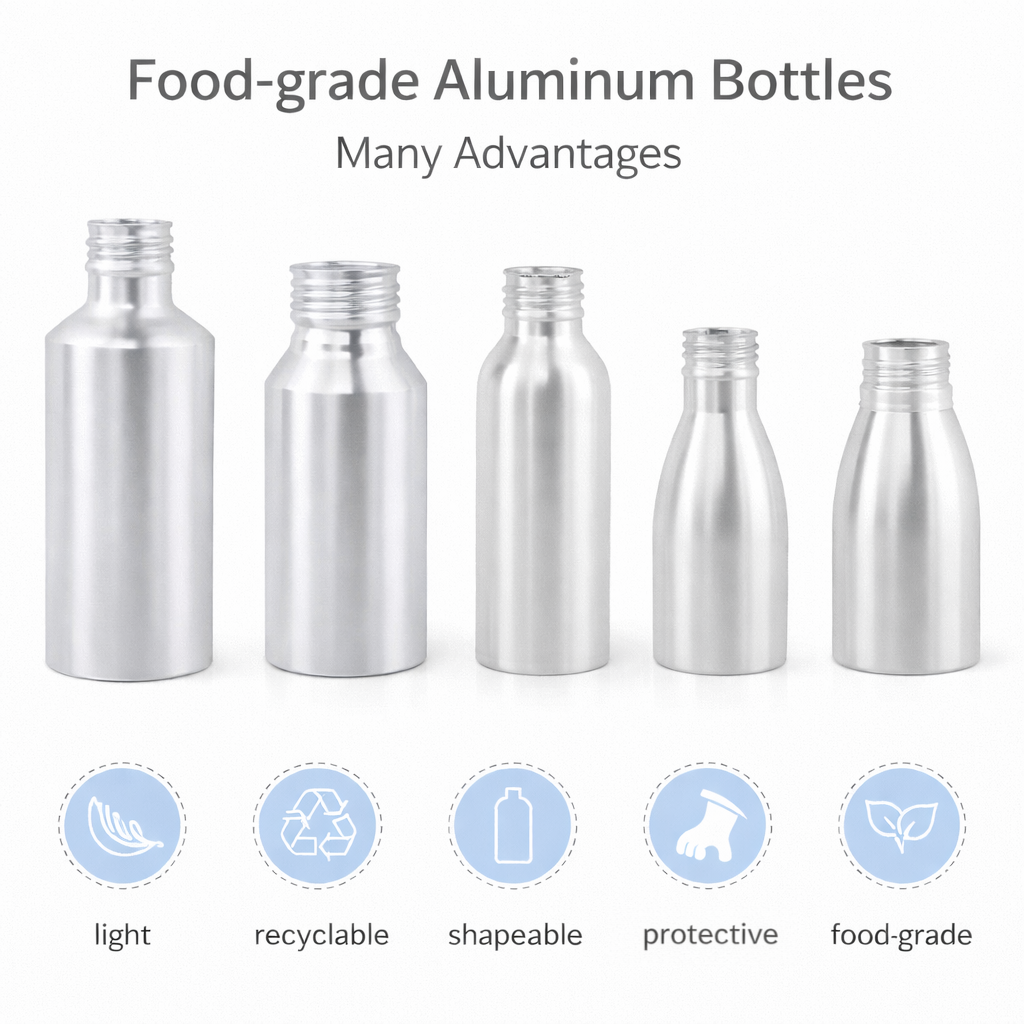
Aluminum Bottles for Food and Beverages: Switching from Plastic to Aluminum
Why the “switch” trend is growing
In the market, packaging is no longer a secondary part of the product. Packaging is becoming a signal of quality, responsibility, and brand reliability. As consumers increasingly care about health and the environment, they look at packaging to make quick evaluations: whether the product is safe, whether it maintains good quality, and whether the brand behaves responsibly.
For the food and beverage industry, this is even more evident. Beverages are products that are purchased frequently, consumed quickly, and easily compared. Just one experience where the taste feels “below expectation” can lead consumers to switch to another brand immediately. Therefore, packaging choices that help stabilize quality and create positive perception give brands a competitive advantage.
Changing consumer habits
Many consumers prefer options that feel clean, neat, and easy to understand. They do not want to read too much text, but they are sensitive to hand feel, firmness, and sustainability messages. This is why many brands view packaging switching as a way to enhance user experience without significantly changing the beverage formula.
This is especially visible in aluminum sports drink bottles, where users often hold the bottle directly while moving, traveling, or exercising. A solid grip, cool surface, and a “clean, neat, professional” appearance of the packaging contribute to the overall experience, even when the beverage formula remains unchanged.
Sustainability pressure and supply chain requirements
Sustainability does not come only from end consumers. It also comes from distribution partners, retail systems, and internal corporate standards. Many brands need a packaging solution that helps them stand firm when facing difficult questions: why plastic is still used, what the plastic reduction plan is, and whether the brand has a long-term commitment.
Why many brands choose to switch from plastic to aluminum
Plastic no longer meets new consumer expectations
Plastic used to be a common choice because it is lightweight, low cost, and easy to produce. However, more consumers are becoming cautious about plastic packaging, especially for beverages consumed daily. User experience, trust, and brand image are factors that cause plastic to gradually lose its advantage in the eyes of consumers.
Difficulty creating differentiation when many products use plastic
In beverage categories, many products have similar formulas and price levels. When most products use plastic bottles, packaging no longer plays a strong role in differentiation. Switching to aluminum allows some brands to refresh their image without changing the product inside.
Plastic raises more questions in the supply chain
From the perspective of distributors and retailers, plastic packaging often leads to questions about recyclability, post-use handling, and long-term plastic reduction direction. This forces brands to explain more, especially when working with international markets.
Aluminum as a suitable option for long-term direction
In this context, aluminum is considered by many brands as an alternative that better meets new expectations related to image, transparency, and readiness for future requirements.
What switching from plastic to aluminum brings to brands
If summarized according to core needs, switching to aluminum bottles for food and beverages usually revolves around three values: food contact safety, flavor stability, and sustainability. The important point is that these are measurable values based on customer experience, control processes, and technical documentation, not empty marketing claims.
Raising food contact safety standards
In recent packaging switching projects, many brands choose food-grade aluminum bottles as a solution to standardize food contact requirements, provide technical documentation more easily, and reduce evaluation time from international buyers.
In real implementation, this is very straightforward. Without clear technical documentation, decision-making becomes slower. Buyers need to ask repeatedly, technical teams need to recheck, and packaging switching projects are delayed. Therefore, standardizing food contact safety helps brands save significant time.
Maintaining stable flavor and protecting quality
Maintaining flavor is not just about “tasting better.” It is about being “more consistent.” For beverages, consistency is critical because products go through many stages: production, storage, transportation, display, and consumption. If packaging does not provide sufficient support, perceived quality can change over time, causing inconsistent consumer evaluation.
When brands decide to switch packaging, the goal is usually risk reduction: reducing unintended flavor changes, reducing environmental impact during display, and increasing protection of quality under real conditions.
Increasing sustainability score and brand credibility
Sustainability is a brand asset when implemented correctly. It helps brands become easier to choose, especially when price differences are not significant. However, sustainability is only strong when accompanied by consistency: choosing appropriate materials, communicating messages at the right level, and providing supporting evidence.
Why sustainability must come with evidence
International buyers usually do not like statements such as “100 percent green” without a basis. A safer approach is to say what is accurate and sufficient: recyclable materials, controlled processes, and transparent technical documentation. The clearer and less exaggerated the message, the easier it is to build trust.
Common risks when switching packaging and how to avoid them
Packaging switching can bring major benefits, but if done quickly without control, risks also increase quickly. Below are three common risk groups and practical ways to avoid them.
Seal integrity and leakage risk
Leakage is the issue that causes the most concern for brand owners because it creates double damage: product loss and brand reputation damage. The way to avoid this is to define seal integrity criteria from the beginning, test samples thoroughly, and clearly specify packaging and transportation methods. In practice, many leakage issues do not come from the bottle itself but from filling methods, cap tightening, and transportation conditions.
Beverage compatibility risk
Some beverages are sensitive to storage conditions and display time. Therefore, compatibility testing should be based on real conditions: temperature, time, and sales channels. Do not rely on quick tests and conclusions. The goal is to ensure flavor experience remains stable according to brand expectations.
Transportation and denting risk
Denting can make products look unattractive, difficult to display, and subject to returns. The way to avoid this is to standardize packaging, apply impact protection, and clearly specify pallet stacking requirements when applicable. Brands should also define visual acceptance criteria to avoid disputes about what level of denting is considered a defect.
FAQs
1) Does switching from plastic to aluminum require changing all products at once?
Not necessarily. Many brands start with one product line or one sales channel, then expand after a successful pilot.
2) What do international buyers usually require before making a decision?
Typically technical documentation, quality inspection procedures, samples, and pricing based on a clear configuration.
3) What is the biggest risk when switching packaging?
Usually leakage, deformation during transportation, and unstable perceived quality if testing does not reflect real conditions.
4) How can flavor stability be ensured after switching packaging?
Testing should be conducted under real conditions including time, temperature, transportation, and display before finalizing production configuration.
Conclusion
Switching from plastic to aluminum is not simply a change of packaging material but a strategic decision. This change reflects how the market is shifting, as consumers, distribution partners, and supply chains all expect greater transparency and reliability. In practice, brands that implement switching carefully, based on real evaluation, appropriate testing, and clear information, tend to reduce risk and maintain consistent user experience. Therefore, instead of viewing this as a short-term trend, many brands see packaging switching as a necessary step toward sustainable long-term development.